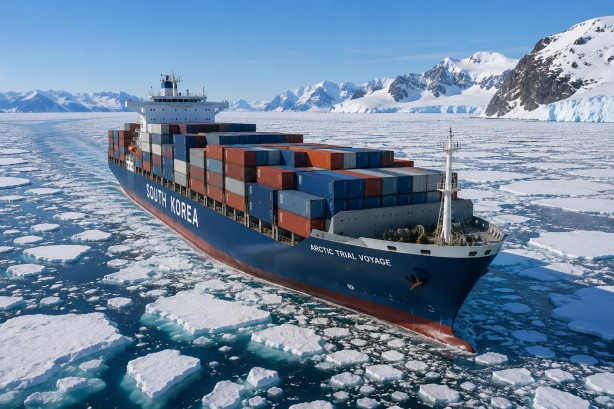
South Korea is embarking on its inaugural trial of a container ship navigating the Arctic’s Northern Sea Route, aiming to evaluate its viability as an alternative shipping passage between Asia and Europe. This comes amid ongoing disruptions to conventional trade routes. The vessel, PanStar Acro, set sail from Busan New Port on August 23, with planned stops in Felixstowe, UK, Rotterdam, Netherlands, and Gdansk, Poland, before returning to South Korea. This journey is anticipated to span approximately 45 days.
The Northern Sea Route, which skirts the Russian Arctic coastline, offers a potential reduction in travel distance by about 7,000 kilometers and could cut the Asia-Europe shipping time by around ten days compared to the traditional path through the Suez Canal, as indicated by the Korea Institute for International Economic Policy. South Korean authorities are considering this Arctic passage as a possible substitute for Middle Eastern shipping lanes, especially as geopolitical tensions and advancements in maritime technology prompt a search for shorter, more efficient routes.
This trial run follows a similar expedition by a Chinese container ship earlier in the month, signaling a burgeoning interest in Arctic shipping lanes. South Korea’s exploration of this route underscores its efforts to remain competitive with China as commercial navigation through the Arctic gains momentum. However, the Northern Sea Route poses significant challenges, including potential complications arising from Western sanctions on Russia, as vessels may need to rely on Russian navigation and weather services to traverse the area.
Environmental organizations have expressed concerns regarding the potential ecological impact of increased shipping activity in the Arctic, a region already facing accelerated warming and diminishing sea ice. These groups warn that heightened maritime traffic could exacerbate environmental degradation in this fragile ecosystem.