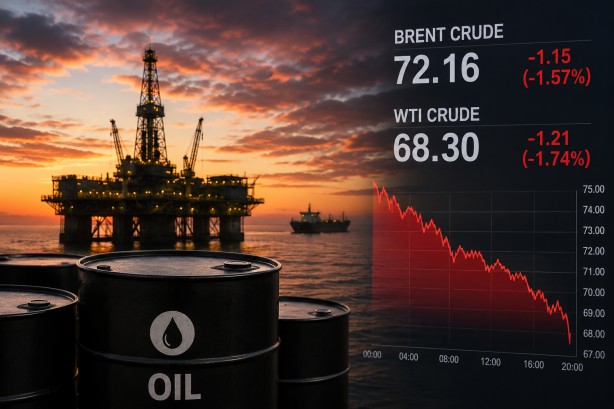
Oil prices saw a slight dip on Thursday, as investors took profits and evaluated the implications of heightened tensions between the United States and Iran. Brent crude experienced a 0.52% drop, settling at $84.51 per barrel, while US West Texas Intermediate crude fell 0.29% to $79.37 per barrel. Despite these declines, both benchmarks hovered near their highest levels in a month after initially continuing their upward trend.
Market dynamics have been influenced by fears of supply interruptions following a new series of US strikes on Iranian military installations, coupled with Tehran’s threats to limit regional energy exports. The Strait of Hormuz, a vital shipping lane that facilitates a substantial portion of the world’s oil and liquefied natural gas trade, remains under close scrutiny by traders. Reports indicate that shipping activity through this passage has lessened in the wake of the recent conflict escalation.
Geopolitical tensions have contributed to the support of elevated oil prices, as analysts observe. However, investors are attentively watching to see if the situation will lead to significant disruptions in energy supply chains. Concerns have also been raised regarding the security of the Bab el-Mandeb Strait, another critical energy transit corridor, due to apprehensions that regional allies might get embroiled in the dispute.
Some analysts caution that if tensions continue to mount and there are ongoing disruptions to exports, oil prices could escalate further. Conversely, if the crisis de-escalates, there may be a reduction in prices as the year progresses. The evolving situation underscores the delicate balance in global oil markets, where geopolitical factors can swiftly influence prices.