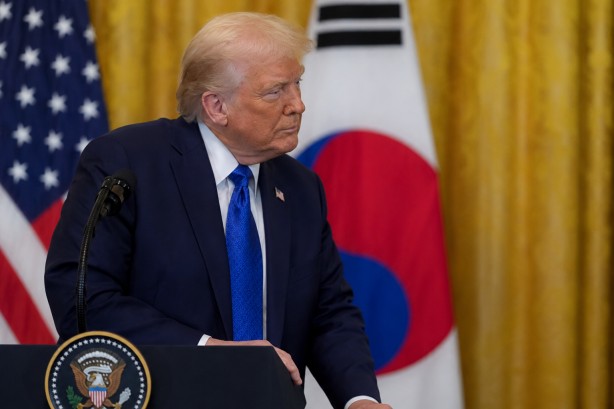
President Donald Trump has suggested that South Korean shipbuilders might soon play a critical role in upgrading and expanding the United States Navy. This potential collaboration could lead to the acquisition of naval ships constructed outside the U.S., a significant shift in current policy. Speaking at the Pennsylvania Defense and Innovation Summit, Trump emphasized the necessity of modernizing the aging American naval fleet. He mentioned that Washington is actively considering closer ties with South Korean companies and others to achieve this goal.
In line with these discussions, Trump announced plans for the construction of two National Security Multi-Mission Vessels at the Hanwha Philly Shipyard in Philadelphia. The project, estimated at around $1.5 billion, underscores the growing defense collaboration between the U.S. and South Korea. South Korean President Lee Jae Myung disclosed that Trump had inquired if South Korea could swiftly build ten naval vessels for the U.S., an issue that has been further explored during international discussions.
The U.S. Department of Defense and the Navy have reached out to major South Korean shipbuilding firms, such as HD Hyundai Heavy Industries and Hanwha Ocean, to evaluate their capabilities in designing and manufacturing combat ships. In anticipation of these opportunities, Hanwha has strengthened its position by acquiring shipyard facilities in Philadelphia in 2024 and is pursuing licenses to produce military vessels in the United States. At the same time, HD Hyundai and Samsung Heavy Industries have expanded their partnerships with American companies, aiming to penetrate the U.S. naval shipbuilding market.
Despite these promising developments, significant legal obstacles remain. Current U.S. regulations prohibit the construction of naval vessels outside the country, necessitating either legislative amendments or special exemptions to allow overseas production. This legal framework presents a challenge to the proposed collaborations but also highlights the potential for significant policy changes in the future.