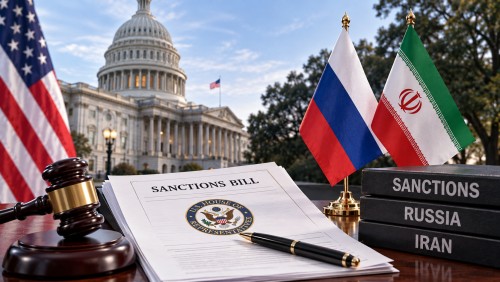
The US House of Representatives has approved the Lindsey O. Graham Sanctioning Russia and Iran Act of 2026, a legislative effort designed to increase economic pressure on Russia due to its ongoing conflict in Ukraine, while also extending sanctions against Iran. The measure passed with a 262-159 vote on September 16 and now awaits President Donald Trump’s decision.
Having already passed the Senate in August, the bill targets several facets of Russian economic and strategic interests. It includes sanctions on Russian officials, financial institutions, and energy sectors. Additionally, the legislation seeks to disrupt the so-called “shadow fleet” used to bypass existing sanctions by implementing measures such as additional tariffs of up to 100% on goods from nations that purchase Russian oil or gas or facilitate sanctions evasion.
The legislation also addresses Iran, extending the Iran Sanctions Act through 2031. It introduces new measures targeting financial and energy-related activities linked to the country, further tightening the economic constraints imposed by the United States.
Despite its passage, the bill saw some opposition in the House. Critics were particularly concerned about provisions that expand presidential authority over tariffs and sanctions. Nevertheless, the legislation gained bipartisan support, reflecting a shared interest in increasing pressure on both Russia and Iran through economic means.