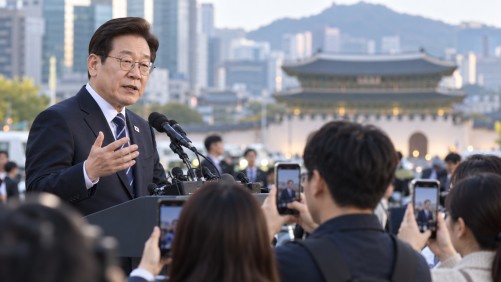
South Korean President Lee Jae Myung is ramping up his engagement on social media platform X in an effort to communicate directly with the public amid a decline in his approval ratings and rising political tensions. A recent national poll indicates a drop in Lee’s approval rating by 2.2 percentage points to 35.2%, while his disapproval rating climbed to 61.4%. The survey highlights waning support from centrist, conservative, and progressive voters, reflecting dissatisfaction with government policies and ongoing political disputes.
President Lee has faced mounting criticism regarding various issues, including personnel appointments, judicial independence, national security, and the surge in housing costs in the Seoul metropolitan area. Additionally, disagreements over prosecution reform have stirred tensions within the ruling Democratic Party of Korea.
The ruling party itself experienced a significant dip in public support, with a separate survey showing a seven percentage point drop to 35.5%. Meanwhile, the main opposition People Power Party saw an increase to 41.3%, overturning the standings from the previous week, although the difference remains within the survey’s margin of error.
In response to these challenges, Lee has intensified his use of X, increasing his posts from 37 in August to 116 in September, with 65 more published in October so far. His posts focus on explaining government policies, addressing political controversies, and promoting his administration’s achievements. Furthermore, Lee has committed to enhancing direct public engagement through press conferences, public debates, field visits, and livestreams.
Despite these efforts, some of Lee’s online remarks and personnel decisions have sparked criticism, including disagreements with supporters over prosecution reform. Opposition leaders have questioned whether Lee’s social media strategy effectively addresses broader public concerns or merely engages his political base.
As President Lee seeks to rebuild public support, the political landscape remains fraught with disputes over economic policy, national security, and judicial independence, posing a significant challenge for his administration.