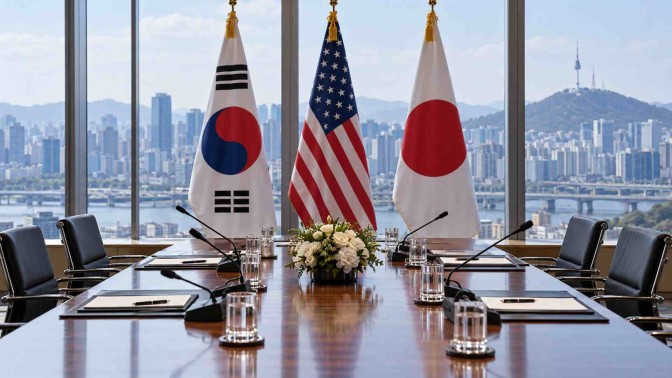
South Korean Foreign Minister Cho Hyun is set to meet with US Secretary of State Marco Rubio and Japanese Foreign Minister Toshimitsu Motegi in Atlanta on Friday to discuss recent developments in North Korea and regional security cooperation. The meeting, held alongside the G20 foreign ministers’ gathering, seeks to enhance trilateral collaboration amid ongoing tensions within the South Korea-US alliance.
The discussions will primarily address North Korea’s recent ballistic missile tests and the implications of leader Kim Jong-un’s visit to China. The three nations aim to coordinate their efforts to press North Korea towards denuclearization and adherence to United Nations sanctions, especially in light of new US sanctions targeting North Korean IT-worker networks accused of financing Pyongyang’s weapons programs.
However, the meeting occurs amidst concerns over strains in the South Korea-US relationship. Recent visa delays for South Korean lawmakers traveling to the US have stirred diplomatic tensions, with Seoul urging expedited processing. Foreign Minister Cho labeled the visa issue as undesirable but downplayed its impact on the broader alliance.
Additional challenges include US restrictions on sharing intelligence concerning North Korea and slow progress on discussions about South Korea’s proposed nuclear-powered submarines. The transfer of wartime operational control of South Korean forces remains a contentious topic, especially as the South Korea-US Security Consultative Meeting has been postponed to early 2027, raising questions about the timeline for this transfer.
Despite these disagreements, South Korean officials assert that the alliance remains intact, with ongoing consultations addressing security and defense commitments. During his visit to the US, Cho also engaged with representatives of South Korean businesses in Georgia, Alabama, and Tennessee. Business leaders voiced concerns over travel procedures, steel tariffs, and the need for stronger engagement with US authorities.
Cho assured continued government support for South Korean investments in the US, pledging to strengthen diplomatic ties with American officials and lawmakers to facilitate smoother business operations.