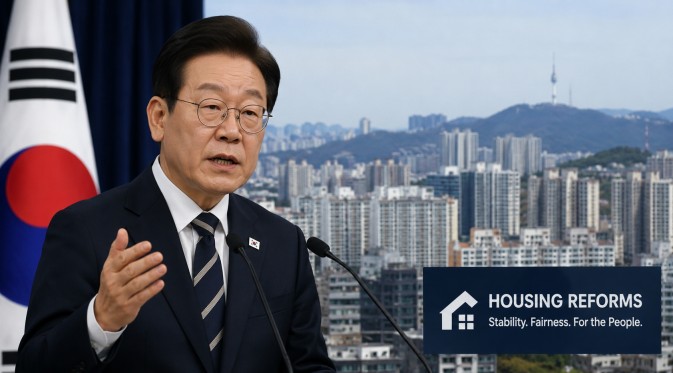
South Korean President Lee Jae Myung has committed to advancing significant housing reforms, highlighting the risks of an unchecked property bubble that could lead to prolonged economic stagnation. Addressing a policy forum, Lee indicated that the government is considering various measures to curb speculation and stabilize the housing market. These measures could include increased property holding taxes, revised capital gains taxes, and stricter rules on mortgage lending.
Lee’s warning draws a parallel to Japan’s economic slowdown following its property bubble burst, underscoring the urgency for reform. He plans to implement a targeted strategy aimed at shielding single-home owners, lower-income families, and residents outside the capital area. In contrast, the strategy would impose heavier tax burdens on individuals owning multiple homes and high-value speculative properties.
In addition, Lee is advocating for tighter controls on rental-deposit loans, with certain exemptions designed to protect young people, newlyweds, and other vulnerable groups. This approach reflects his determination to pursue difficult reforms that he believes are crucial for the country’s long-term economic stability. Lee emphasized the necessity of accepting potential political repercussions to avert a broader economic crisis.
The government is expected to unveil a comprehensive real estate policy package either later this month or in early August. By taking these steps, Lee aims to prevent South Korea from experiencing a similar economic downturn to that of Japan, emphasizing the importance of decisive action in the face of potential political fallout.