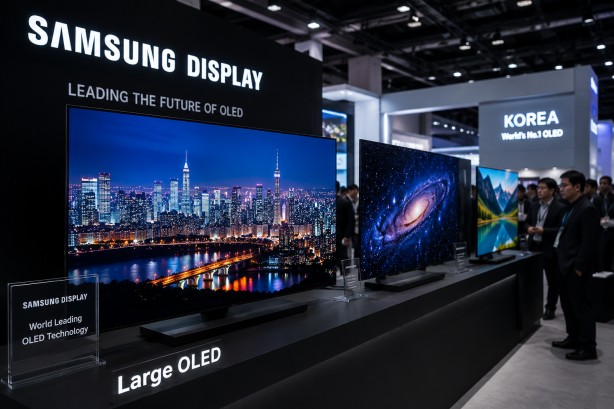
Samsung Display is poised to surpass LG Display in the global mid-to-large OLED panel market revenue during the third quarter, marking a significant milestone as it claims the top spot for the first time. This shift comes as Samsung Display and LG Display continue to dominate the market, collectively accounting for approximately 95% of OLED panels used in laptops and monitors. Meanwhile, Chinese manufacturers remain significantly behind their Korean counterparts in this sector.
Samsung Display has made notable advancements by commencing shipments of advanced OLED panels for laptops. These panels boast higher brightness and enhanced durability, attracting major tech brands such as Lenovo, Asus, Dell, and MSI, who are set to integrate this technology into their products. To further bolster its market position, Samsung is expanding its production capabilities. It is investing in a new 8.6-generation manufacturing line aimed at reducing production costs and increasing output volume.
Despite substantial investments by Chinese display makers to narrow the gap in the OLED market, they continue to grapple with challenges related to production yields. While there has been significant improvement in China’s OLED technology, Korean manufacturers maintain a competitive edge, particularly in terms of quality, customer trust, and the production of large panels.
Industry analysts highlight that although China is making strides in advancing its OLED capabilities, the established reputation and technological superiority of Korean companies like Samsung and LG continue to solidify their leadership in the market. This continued dominance is reflected not only in technological innovation but also in the ability to meet the high expectations of global consumers and tech companies.
As the competition intensifies, the next few quarters will be critical in determining whether Chinese manufacturers can further close the gap or if Samsung Display will strengthen its newfound position at the top of the mid-to-large OLED panel market. Observers are keen to see how these dynamics evolve, particularly as technological advancements and production efficiencies continue to shape the competitive landscape.