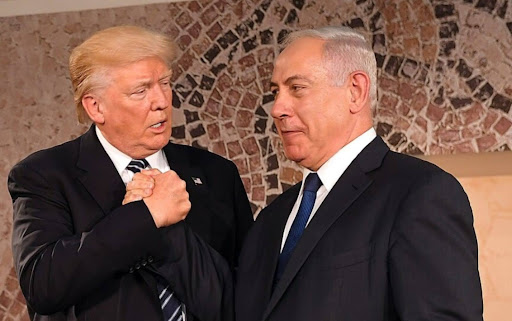
The most operationally concrete expression of the strategic divergence between US President Donald Trump and Israeli Prime Minister Benjamin Netanyahu is the difference in their preferred military methods. Trump’s campaign has concentrated on degrading specific Iranian capabilities — nuclear infrastructure, missile systems, naval assets — through precision strikes that serve his defined objective of nuclear containment. Netanyahu’s campaign has added a crucial and distinctive element: the assassination of Iranian political and military leaders, designed to destabilize the Iranian government from within. These different methods reflect different objectives and produce different consequences.
Israel’s assassination program is not incidental to Netanyahu’s strategy — it is central to it. If the objective is regional transformation and regime change, then removing key Iranian decision-makers is a logical tool. Eliminating experienced military commanders reduces Iran’s operational capability. Assassinating political figures creates uncertainty and vulnerability at the leadership level. Targeting both simultaneously is designed to create the kind of internal pressure and instability that Netanyahu hopes will eventually contribute to political transformation.
Trump’s campaign, by contrast, does not require the assassination program to achieve its defined objective. Nuclear containment is achievable through strikes on physical infrastructure — enrichment facilities, delivery systems, weapons design programs — without necessarily requiring the elimination of individual Iranian leaders. The assassination dimension of the Israeli campaign goes beyond what Trump’s nuclear-focused strategy demands, into territory that serves Netanyahu’s broader transformation objectives.
The assassination program has not been a subject of the same public friction that South Pars generated — partly because it falls into a category that American officials have been less willing to address publicly, and partly because its consequences, while escalatory in principle, have not produced the same kind of immediate global economic blowback as the energy infrastructure strike. But it represents a clear expression of the divergence in methods that Director of National Intelligence Gabbard confirmed in her testimony about different objectives.
Understanding the difference between Trump’s infrastructure focus and Netanyahu’s assassination strategy is essential for understanding what kind of war each leader is actually fighting — and why their occasional disagreements over specific targets and methods reflect a genuine and consequential strategic divergence rather than merely tactical differences in a shared campaign.