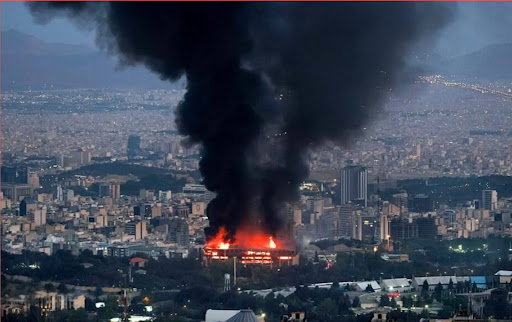
The United States suffered two significant blows in Iraq on Saturday that underscored the widening geographic reach of the Iran conflict. Six American service members were killed when a military refuelling aircraft crashed in western Iraq, and the US embassy in Baghdad was struck by missiles in an overnight attack linked to Iran-aligned militia groups. The embassy issued an emergency advisory urging all American citizens in Iraq to leave the country immediately, warning of continued threats from drones, rockets, and ballistic missiles in Iraqi airspace.
The incidents came as the broader US-Iran war entered its third week. US warplanes were conducting ongoing strikes against Iran, including further bombing of Kharg Island, which President Trump said in public had been effectively destroyed. Iran was fighting back on multiple fronts, launching missile strikes at the UAE and rocket salvoes at Israel. Iranian military officials threatened to attack any Gulf facility with American ties and called on Arab governments to expel US forces from their bases.
In the UAE, ballistic missiles struck near Fujairah’s major energy port, suspending oil-loading operations and sending smoke rising into the sky. Iran warned civilians near ports and US installations to evacuate, signalling the possibility of additional strikes. The UAE said it had the right to defend itself but was still prioritising a non-military resolution. Trump meanwhile posted on Truth Social calling for allied navies to join a coalition to force the Strait of Hormuz open, naming China, France, Japan, South Korea, and the UK as nations whose ships he wanted to see in the region.
Israel was deeply embedded in the conflict, launching dozens of airstrikes on Iran on Saturday in an effort to destroy Iran’s missile launch capabilities. At least 15 people were killed in an Israeli strike on an Isfahan factory. Iran continued to fire rockets at Israel, and Israeli officials accused Hezbollah of using civilian ambulances to transport fighters and weapons in Lebanon. Israel also conducted waves of strikes against Hezbollah in Lebanon, where more than 800 people had now been killed and 850,000 displaced.
The war was reshaping every aspect of the region. Energy markets were convulsed by fear of further supply disruptions, with oil already at $120 per barrel and potentially heading higher. Iran claimed its strategy was to survive, maintain military capacity, and wait Trump out. Trump said he had no interest in a deal yet and no timeline for ending the conflict. With thousands dead across the region and the global economy trembling, diplomats and analysts warned that time to find a peaceful resolution was running short.