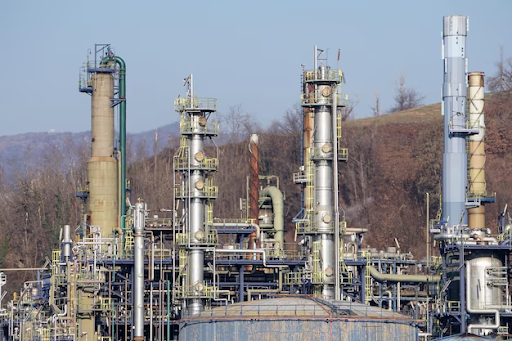
A series of drone attacks on Qatar’s major energy production facilities triggered one of the most significant disruptions to global liquefied natural gas markets in recent years, sending prices surging across Europe and raising concerns about supply security from Asia to the United Kingdom. QatarEnergy confirmed on Monday that it had halted production at the Ras Laffan and Mesaieed sites in response to the attacks, which were linked to the widening military conflict in the Middle East.
Qatar’s energy infrastructure at Ras Laffan is among the most important in the world. The complex is home to the vast majority of Qatar’s LNG production capacity and is one of the largest single LNG export facilities globally. A drone attack on the site, confirmed by Qatar’s defence ministry, forced an emergency shutdown of production. Qatar’s defence ministry reported no human casualties from the attacks, but the economic and energy market implications were immediate and severe.
Global LNG markets responded rapidly to the news. The European benchmark gas price, the Dutch day-ahead contract, surged 41% to €45 per megawatt hour. UK gas prices rose 40% to 110p a therm. The moves reflected both the direct loss of Qatari supply and the broader concern that escalating conflict in the region could lead to further disruptions. Energy analysts warned that households and businesses could face higher energy bills if the disruption continues.
The scale of the potential supply loss is significant. Qatar is one of the world’s leading LNG exporters, and the shutdown of its production could eliminate close to 20% of global LNG supply. The loss of such a large share of global supply creates an immediate problem for buyers who depend on Qatari LNG, particularly in Asia, where countries like Japan, South Korea, and China are significant customers.
The wider geopolitical context suggests that the disruption may not be quickly resolved. Military operations in the region showed no signs of winding down, and the combination of attacks on energy infrastructure, the closure of the Strait of Hormuz, and the suspension of shipping by major carriers paints a picture of a crisis with the potential for a prolonged duration. For global energy markets, the question is not just how severe the disruption will be, but how long it will last.