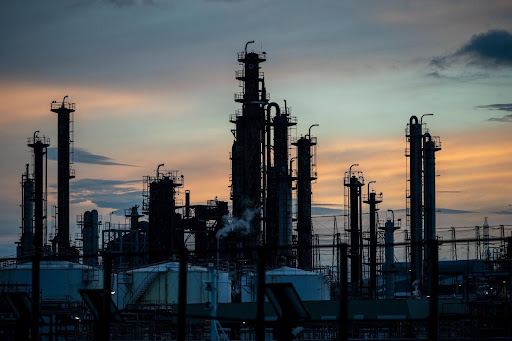
Iran’s expanding military offensive across the Gulf is dealing a serious blow to the world’s oil supply, pushing Brent crude back above $100 a barrel Thursday and triggering a cascade of market and diplomatic reactions. The scale and coordination of Iranian strikes — targeting everything from merchant ships to inland fuel tanks — reflects a deliberate strategy to maximize economic pain. The world’s energy security has not faced such a direct threat in decades.
The Strait of Hormuz has been closed to normal shipping since February 28, when the conflict began, blocking a corridor responsible for roughly one-fifth of global oil and gas flows. Oman’s Mina Al Fahal terminal, one of the last viable export points in the region, was cleared of all vessels Thursday. Iraq’s oil ports were shut down after tanker attacks, while Bahrain’s Muharraq Governorate was placed under a shelter-in-place order.
Brent crude gained 9% to briefly touch $100.29 a barrel before pulling back to $98. West Texas Intermediate climbed 8.6% to $94.75. The oil price has risen from $60 at the start of the year to a peak of $119 earlier in the week, representing one of the sharpest oil price shocks in modern history.
The International Energy Agency responded with the largest emergency reserve release in its history, with 32 nations collectively releasing 400 million barrels. The United States pledged 172 million barrels from its Strategic Petroleum Reserve, with Energy Secretary Chris Wright noting that Iran had manipulated and threatened allied energy security. President Trump said the release would substantially lower oil prices.
Goldman Sachs lifted its Q4 2026 Brent forecast to $71 a barrel. Deutsche Bank warned that markets are increasingly pricing in a lengthy conflict that could trigger a broad stagflationary shock. Asian stocks fell and European gas prices climbed 7.7% for the second day running.